Keynote speakers
We are pleased to share the confirmed keynote speakers so far. Stay tuned for more updates.
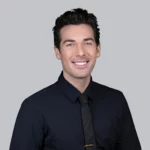
Andrew Nicholson
Dr. Andrew Nicholson is an Associate Professor in the School of Psychology at the University of Ottawa and is the Vice President of Research at the Atlas Institute for Veterans and Families. Dr. Nicholson also holds the Atlas Institute Chair of Minority Stress and Trauma Research and is a Scientist at the University of Ottawa’s Institute of Mental Health Research.
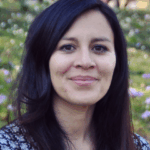
Stefanie Enriquez-Geppert
Dr. Stefanie Enriquez-Geppert is an assistant professor and leads various projects at the University of Groningen, with a particular focus on neurofeedback research. She researches how our brain performs executive functions – the skills that help us to plan, concentrate and juggle multiple tasks. Her main goal is to develop brain training methods that improve these everyday skills and make everyday decision making and problem solving easier for everyone.
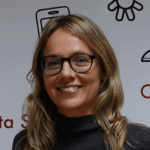
Patrícia Figueiredo
Patrícia Figueiredo investigates human brain function using noninvasive imaging, with a focus on MRI and its integration with EEG. Her research combines advanced MRI techniques to quantify cerebrovascular dynamics and uses EEG–fMRI to characterise the spatial and temporal organisation of brain networks. Her work aims to improve understanding of both healthy and disordered brain function and to translate these insights into noninvasive neuromodulation strategies, such as neurofeedback. She applies these approaches to conditions including epilepsy, migraine, dementia-related cerebrovascular disease, schizophrenia, and depression.

Aurelio Cortese
Aurelio Cortese is a computational neuroscientist specializing in higher cognition, metacognition, reinforcement learning, and closed-loop fMRI neurofeedback. He is Head of the Decoded Neurofeedback Lab at ATR Institute International in Kyoto and an Associate Professor at Sungkyunkwan University in South Korea. Trained at NAIST (PhD) and EPFL (BSc/MSc), he has held research roles across Japan, the U.S., and Europe, producing influential work on unconscious learning, confidence, fear modulation, and AI-guided neurofeedback. He has published extensively in top journals such as Nature Communications, PNAS, eLife, and Phil. Trans. R. Soc. B, and received multiple prestigious awards. Cortese is also an active advisor to neurotechnology startups, a frequent invited speaker at international conferences, and an organizer of high-level symposia on learning, metacognition, and brain–AI interfaces.
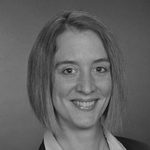
Ann-Christine Ehlis
Ann-Christine Ehlis is a clinical neuroscientist and professor directing the Psychophysiology and Optical Imaging unit in the Department of Psychiatry and Psychotherapy at the University of Tübingen. Trained as a psychologist and earning her PhD summa cum laude, she has built a distinguished career investigating the neurobiology of mental disorders—particularly ADHD, depression, and anxiety—using methods such as fNIRS, EEG, neurofeedback, and non-invasive brain stimulation (TMS/tDCS). She has developed innovative approaches to cognitive control and prefrontal dysfunction, and contributed influential work on multisensory integration, neurostimulation, and clinical neurofeedback standards. With more than 220 publications, an h-index over 70, and leadership roles including PI and board member of the German Center for Mental Health and Associate Editor of Human Brain Mapping, she is recognized internationally as a leading expert in applied neuroimaging and translational psychiatry.

Oliver Bichsel
Oliver Bichsel, MD, PhD, is a board-certified neurosurgeon at University Hospital Zurich, with advanced research training in biomedical engineering and neuroscience (MSc and PhD) from ETH Zurich. His research focuses on brain–machine and brain–computer interfaces and their translation into clinical neuroscience. As one example, he has developed and optimised neurofeedback approaches using implanted deep brain stimulation (DBS) electrodes. Building on initial applications in Parkinson’s disease, he aims to extend these techniques to additional neurological and psychiatric indications for which DBS is currently used or anticipated to be employed.