Real-time functional imaging neurofeedback conference
The rtFIN (real-time functional imaging neurofeedback) 2026 conference will mainly focus on neuroimaging topics including functional magnetic resonance imaging (fMRI), electroencephalography (EEG), magnetoencephalography (MEG), and functional near-infrared spectroscopy (fNIRS) imaging modalities used in a real-time (closed-loop) setting to modulate brain activity in healthy individuals and in clinical populations. Growing invasive approaches such as iEEG for real-time applications will also be included.
Neurofeedback, — the self-regulation of brain activity through imaging or neuromodulatory techniques, — specifically, will be the center of interest. Recent impactful progress in neural decoding methods for identifying healthy and abnormal brain states, cognitive processes, or network dynamics in real-time, will be discussed.
The conference will involve a blend of methodological know-how in neurofeedback, technical considerations of real-time imaging for different modalities, and the translation to clinical applications such as attention-deficit/hyperactivity disorder (ADHD), tinnitus, Parkinson’s disease, craving, depression, functional neurological disorder (FND), among others.
- This bi-annual meeting will help to tackle the following pressing questions in the field:
- What are the neural mechanisms underlying effective neurofeedback-mediated learning?
- In clinical populations, who can benefit from neurofeedback and under which conditions?
- What is the path forward to integrate real-time neuroimaging into clinical practice?
- What ethical and regulatory frameworks are required to ensure safe and accessible deployment of neurofeedback?
The main goal is to advance the field of real-time functional neuroimaging and neurofeedback by fostering interdisciplinary exchange, accelerating methodological innovation, and strengthening international collaborations.
- Advancing feedback paradigms
- Bridging disciplines
- Catalyzing translational research
- Promoting knowledge exchange
- Positioning Switzerland as a hub
- Strengthening international collaboration
Organizing committee
The RTFIN 2026 organizing committee, led by Tomas Ros, is committed to driving innovation in neuroscience and neurotechnology. With expertise in EEG, neurofeedback, and cutting-edge research, the team works together to create an inspiring platform for sharing breakthroughs, fostering collaboration, and shaping the future of the field.
Their dedication ensures that RTFIN 2026 in Geneva will be an exciting and impactful event for scientists, clinicians, and innovators alike.

Tomas Ros
Tomas Ros is a Senior Lecturer at the Department of Clinical Neuroscience at the University of Geneva, specializing in the methodological development of EEG neurofeedback for psychiatric and neurological conditions. His research is driven by a fascination with the link between brain function and human behaviour, a passion he pursued through his PhD in Psychology at Goldsmiths, University of London (2010). As a postdoctoral fellow at Western University in Canada, he investigated neurofeedback as a potential treatment for post-traumatic stress disorder (PTSD), work that earned him the Brain Star Award from the Canadian Institutes of Health Research. At the University of Geneva, he has expanded these applications to pioneer new therapies for post-stroke rehabilitation and attention-deficit hyperactivity disorder (ADHD).

Patrik Vuilleumier
Patrik Vuilleumier is a neurologist and cognitive neuroscientist who leads the Laboratory for Neurology and Imaging of Cognition at the Geneva University Medical Center. His research investigates the cerebral mechanisms underlying cognition, perception, emotion, and consciousness using neuroimaging techniques such as fMRI and ERPs, as well as neuropsychological studies in brain-damaged patients. His team studies how the visual system recognizes objects and faces despite changes in viewpoint, how different regions of the temporal cortex store and maintain object memories, and how sleep consolidates newly formed memory traces. A major focus of his work is how emotional signals—such as fear, anger, or reward—shape perception and behavior. He has shown a key role of the amygdala in detecting threat and explored how emotion-related circuits influence attention to faces, voices, and other sensory cues. More broadly, his research aims to understand how distributed brain areas interact to support perception and emotion, how lesions disrupt these networks, and how restoring normal interactions could improve function in damaged neural systems.

Dimitri Van De Ville
Dimitri Van De Ville is a Full Professor at EPFL and the University of Geneva, where he leads research at Campus Biotech in Geneva. He is widely recognized for his contributions to bioengineering and medical imaging, especially the development of advanced signal- and image-processing methods to analyze brain activity. His recent work on dynamic functional connectivity has shown how resting-state brain networks temporally overlap, offering a clearer picture of brain organization and enabling more sensitive biomarkers, including for early detection of mild cognitive impairment. In addition, he advances the use of graph signal processing for neuroimaging and develops real-time fMRI neurofeedback approaches, aiming to deepen our understanding of brain dynamics and create tools that can support diagnosis, monitoring, and therapeutic interventions.
Olaf Blanke
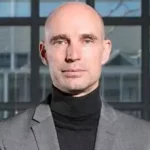
Olaf Blanke is founding director of the Center for Neuroprosthetics and holds the Bertarelli Foundation Chair in Cognitive Neuroprosthetics at the Ecole Polytechnique Fédérale de Lausanne (EPFL). He directs the Laboratory of Cognitive Neuroscience at EPFL and is Professor of Neurology at the University Hospital of Geneva. Blanke’s research focuses on the neuroscience of consciousness and embodiment, human augmentation and personalized medicine. Blanke pioneered robotics and virtual reality technology in neuroscience of consciousness studies and cognitive psychology. His medical-translational activities are dedicated to preventive, diagnostic and therapeutic procedures and devices in neurodegenerative disorders (Parkinson’s disease, Dementia), mental health and well-being. Blanke is co-founder of Metaphysiks Engineering and member of the board of Mindmaze.
Nicolas Gninenko
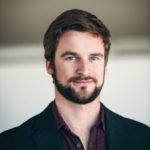
Nicolas Gninenko is a scientist at the Medical Image Processing Laboratory of the Neuro-X Institute at EPFL, where he develops advanced neuroimaging methods for chronic tinnitus. He also works with Neurosoft Bioelectronics, a start-up focused on minimally invasive neuromodulation for severe tinnitus. Previously, he was a postdoctoral researcher in the Functional Neurological Disorders (FND) group at the University of Fribourg with Prof. Selma Aybek, overseeing neuroimaging and neurofeedback projects. He holds a PhD in Electrical Engineering from EPFL, where he specialized in real-time fMRI neurofeedback for tinnitus and led the fMRI arm of the NeuroTin clinical trial supported by the Wyss Center for Bio and Neuroengineering. His work centers on tinnitus-related functional brain changes and the identification of novel neurofeedback targets, with broader expertise in neuroimaging, brain network analysis, and neuroengineering.